
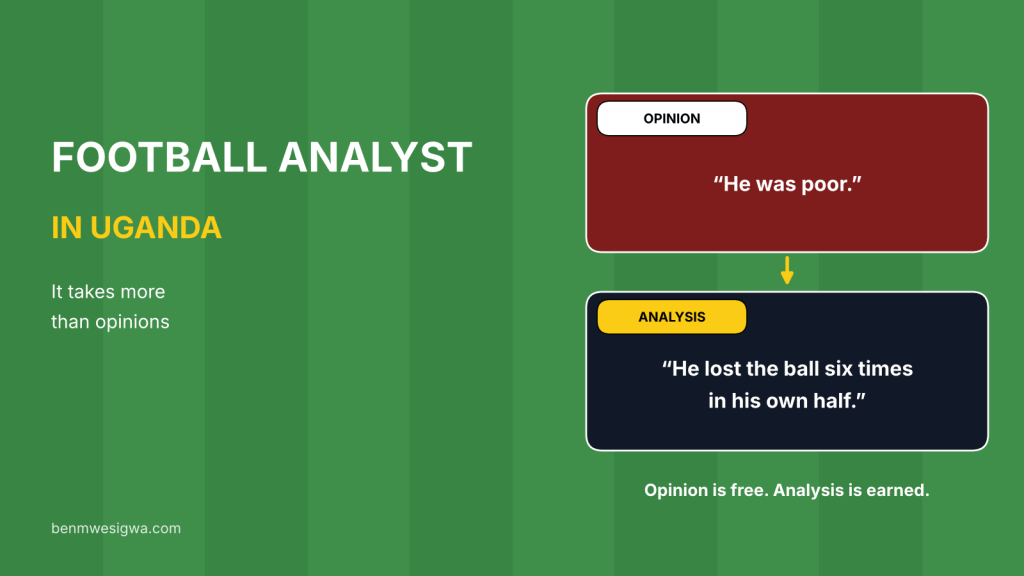
Football’s rules are clear, yet we argue about every foul, every selection and every player. That is part of why we love it. There is nothing wrong with being an “analyst” in a WhatsApp group or on a fan channel.
The problem starts when opinion is treated as expertise.
Would you ask a journalist?
Would a TV station invite a journalist to analyse an Ebola outbreak? Would you take legal advice, tax advice or stock market tips from a journalist who had googled the topic?
You would say no, because they haven’t studied it.
In Uganda, journalists are often the football analysts, and not only for entertainment. In 2020, journalists were influencing national team selection, recommending transfers, working as agents and scouts, doing commentary and choosing the player of the match.
Good media houses use people with technical knowledge and show their profile, so the audience knows what they are getting. Some of the most respected commentators in the world have taken coaching courses so their opinion is informed.
What a good football analyst does
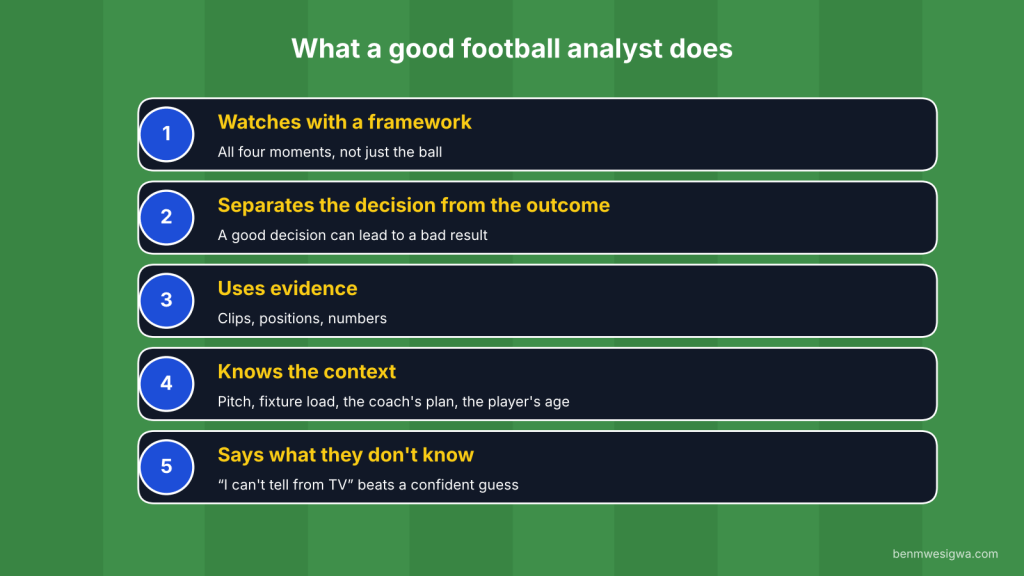
- Watches with a framework. They look at the four moments of the game (attack, defence and both transitions), not just the ball.
- Separates the decision from the outcome. A good decision can lead to a bad result, and the other way round.
- Uses evidence. Clips, positions, numbers: passes, recoveries, distances, shots. “He was poor” is not analysis. “He lost the ball six times in his own half” is.
- Knows the context. Pitch, fixture load, the coach’s plan, the player’s age.
- Says what they don’t know. An honest “I can’t tell from TV” beats a confident guess.
How to become one
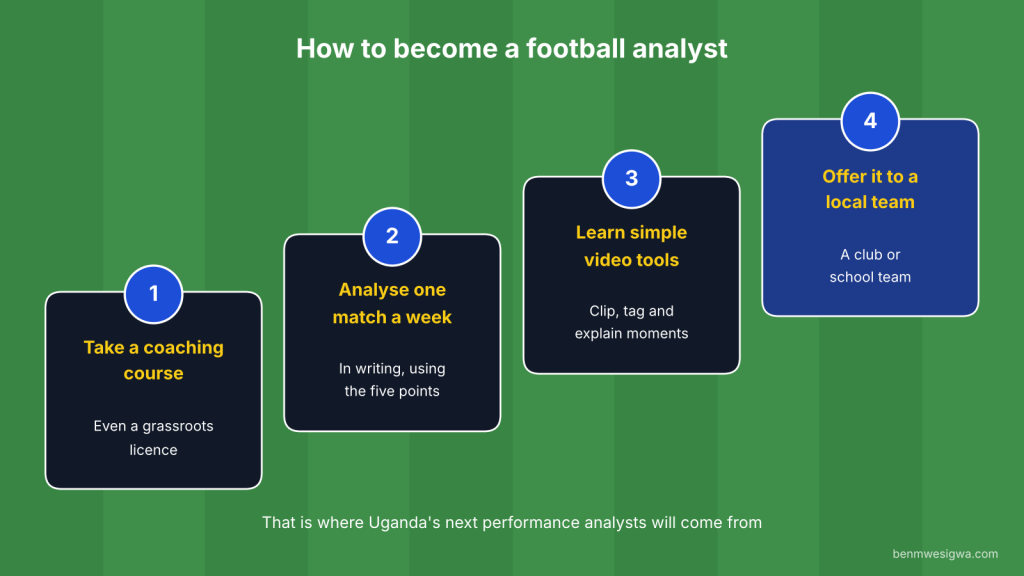
- Take a coaching course. Even a grassroots licence will change how you watch a match.
- Analyse one match a week in writing, using the five points above.
- Learn simple video tools. Clip and tag moments from a match, then explain them.
- Offer it to a local club or school team. That is where Uganda’s next performance analysts will come from.
For media houses
Pair a presenter with a qualified analyst, and show the analyst’s background on screen.
The takeaway
Opinion is free. Analysis is earned. Uganda’s football will improve when the people who influence decisions understand the game.
Who is the best football analyst you have watched or listened to, and why? Tell me in the comments, and subscribe for more.
Related: The four moments of football · Bias in Ugandan football


Leave a Reply